
 EN
EN
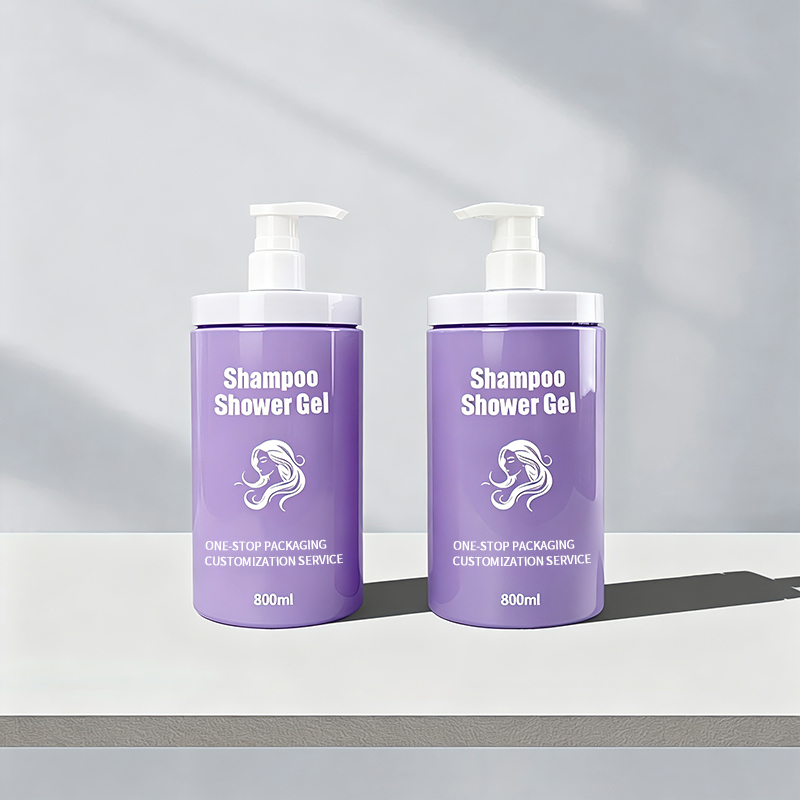
A hand wash may only stay on a sink for a few seconds before someone uses it, but the bottle has to get that short interaction right every time. The pump needs to work, the bottle needs to stay steady, and the amount of soap released should feel appropriate for the formula.
Most shoppers at a retail sink don’t spend ten minutes analyzing why a pump worked smoothly or why a bottle didn't tip over when they slammed down on it. But if you’re a brand owner or a procurement specialist, you know those tiny details can make or break repeat orders. A customer might not consciously praise a bottle that works perfectly, but they’ll certainly switch brands if a cheap pump jams, a thin wall collapses, or a viscous gel refuses to come out.
For brands developing a new soap line, choosing packaging should therefore start with the relationship between the formula and the dispensing system. Bottle capacity, material, pump output, neck structure, stability, and appearance can then be developed around that foundation.
How Formula Viscosity Affects a Hand Wash Bottle?
The quickest way to ruin a consumer's bathroom experience is putting the wrong pump engine on a liquid hand wash bottle. Liquid soaps flow easily, requiring relatively low vacuum pressure inside the pump mechanism to draw fluid up the dip tube. Gel formulas, on the other hand, are thicker and exhibit high shear viscosity. If your pump engine lacks sufficient spring tension or features too narrow an internal piston, the gel creates a vacuum lock. The pump head stays stuck at the bottom, and your customer gets frustrated.
The issue is t limited to the pump outlet. Inside the package, the liquid has to travel through the dip tube, enter the pump chamber, and then move through the dispensing channel. A thicker formula can create more resistance at each stage. If the internal pathway is too narrow, the pump may feel stiff or the product may be released inconsistently. If the system is oversized, on the other hand, the output may be unnecessarily high for normal hand washing.
As a custom bottle manufacturer, we always advise clients to run real-time viscosity testing using their exact bulk liquid rather than testing with plain water. Water flows through almost anything, but real-world soaps contain surfactants, thickeners, and moisturizing oils that change flow dynamics entirely. Getting the pump engine matched to your fluid viscosity eliminates mess, prevents leakage during shipping, and ensures every stroke delivers the precise milliliter dosage your product promises.
Choosing the Right Hand Wash Pump Bottles for Liquid, Gel and Foam
Liquid hand wash is generally compatible with a conventional pump system, but even here, dispensing volume matters. If each press releases too little soap, users may repeatedly pump the bottle. If it releases too much, the product may be consumed unnecessarily and leave excess soap around the sink.
Gel formulas need greater attention to pump resistance and flow recovery. A thick gel should move smoothly through the system without making the user feel as though they are forcing the pump. The bottle itself should also maintain enough rigidity during operation, particularly when the user presses the pump with one hand. This becomes increasingly important for larger dispensers installed in hotels, restaurants, offices, and public facilities.
A foaming hand wash bottle works on a different principle. Its pump mixes liquid with air to create foam during dispensing, so the pump, liquid viscosity, concentration, and internal structure all influence the final foam quality. A formula that produces excellent foam in one package may behave differently in another if the air-to-liquid ratio or pump mechanism changes. For this reason, foaming packaging should be evaluated as a complete formula-and-dispenser system rather than simply replacing a standard pump with a foaming head.
What Hand Wash Bottle Size and Color Works Best?
A bottle's shape and capacity dictate where it lives and how fast a consumer uses it up. Compact volumes work best in small guest bathrooms or tight kitchen sink counters, while commercial spaces or busy family households prefer larger containers that don't need constant refilling. Balancing these user habits helps brands define their product line and plan their inventory production effectively.
When setting up your production run, sizing directly influences your shipping logistics and unit costs:
Retail & Compact Spaces: A smaller 250ml hand wash bottle is the industry standard for boutique skincare lines, hotel suites, and limited-countertop environments where space is at a premium.
Family & High-Traffic Units: Scaling up to a 500ml/1L hand wash bottle provides a lower cost-per-ounce value for household buyers, reducing refilling frequency while giving your brand a dominant visual footprint on retail shelves.
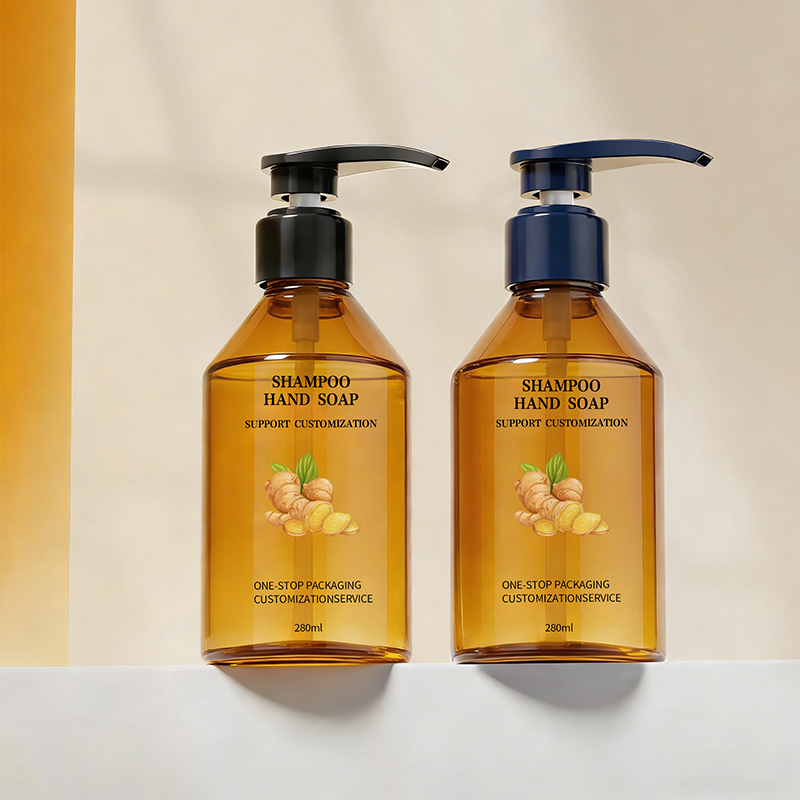
Color choice plays an equally important role in preserving your formulation. Many natural or organic hand soaps use botanical extracts and essential oils that degrade when exposed to direct sunlight or indoor UV rays. Housing your product in an amber hand wash bottle provides an effective light barrier, protecting delicate ingredients from oxidizing or changing color over time. Beyond functional protection, amber tinting offers a classic, apothecary-inspired aesthetic that appeals to eco-conscious and luxury shoppers alike.
Another feature is the transparent hand sanitizer bottle. The transparency always gives people the impression of having complete control and no secrets. The end user can clearly see the remaining amount of liquid inside the bottle, and transparency remains a specific manifestation of high-end bottles.Material selection contributes to these visual differences. PET is often chosen when clarity and a smooth, premium-looking surface are important. HDPE is useful when brands want a more opaque package with good durability. PP is commonly used for pumps and closures. The right combination depends on the formula, filling process, target cost, and intended positioning rather than choosing one plastic as universally superior.
Why Custom Hand Wash Packaging Starts with the Pump?
When designing custom packaging, many brands naturally begin with the bottle shape. A more reliable approach is to begin with the dispensing requirements and work outward.
Consider a thick moisturizing hand wash. Before deciding whether the bottle should be round, square, or oval, the development team should establish the desired amount of soap per pump and the amount of force users should need to apply. Once the pump requirements are understood, the neck, dip tube, bottle dimensions, and structural design can be coordinated around them.
This approach also prevents an attractive bottle from becoming impractical. A unique shape may look impressive in a product rendering but create problems with pump alignment, internal volume, filling, mold complexity, or stability. Customization should improve the package rather than add complexity simply for the sake of being different.
A Custom Hand Wash Bottle can still have plenty of visual flexibility. Brands can use custom Pantone colors, matte or frosted finishes, soft-touch coatings, screen printing, UV printing, labels, and customized shapes. The important point is that visual differentiation should be developed alongside functional requirements rather than after them.
How Bottle Design Affects Stability and Everyday Use?
One detail that deserves more attention is the relationship between the pump and the bottle base. Every time a consumer pushes down on the pump, a vertical force is transferred into the bottle. If the center of gravity is too high or the base is too narrow, the package can move or tip.
This matters even more for gel products because users sometimes apply additional pressure when the formula is thick. A well-designed package should allow the user to operate the pump naturally without needing to hold the bottle with the other hand.
The shoulder and neck design also influence the overall experience. A smooth transition from the bottle body to the neck can create a cleaner appearance, while the correct neck dimensions ensure that the pump remains securely positioned. For larger packages, wall thickness and structural rigidity need to be considered as well, because excessive flexibility can make the bottle feel unstable during repeated pumping.
These are relatively small engineering decisions, but they are exactly the details that distinguish a production-ready package from a bottle that only looks good in a catalog.
This matters even more for gel products because users sometimes apply additional pressure when the formula is thick. A well-designed package should allow the user to operate the pump naturally without needing to hold the bottle with the other hand.
What a Hand Wash Bottle Manufacturer Should Test Before Mass Production
A packaging sample should answer practical questions before a factory starts producing thousands of units. Does the pump dispense the intended amount? Is the force comfortable? Does the bottle remain stable? Does the neck stay securely sealed? What happens when the product becomes more difficult to reach near the bottom?
For liquid and gel formulas, testing should include repeated pumping rather than a single demonstration. Brands should also check for leakage around the closure and any product residue left around the outlet. If the package will be used in hospitality or commercial environments, longer-term repeated-use testing becomes even more valuable.
Foaming products require additional evaluation because foam consistency is part of the consumer experience. The package should be tested with the actual formula to confirm that the foam texture, volume, and dispensing speed remain reasonably consistent throughout the product's use.
An experienced hand wash bottle manufacturer can help identify these issues during sampling. Zhenghao supports custom plastic packaging development from initial design and mold making through sampling, production, printing, and shipment. With more than 8000 square meters of workshop space and multiple blow molding, injection molding, and printing machines, the company can support both customized structures and larger-volume production.
Choosing a Supplier for Custom Hand Wash Bottle Packaging
For a brand ordering packaging for a new product, the supplier's role should extend beyond producing a bottle from an existing mold. The more customized the project becomes, the more important it is that the supplier understands how design, material, tooling, dispensing components, and production fit together.
Zhenghao is a custom plastic packaging manufacturer founded in 2007, specializing in plastic bottles, jars, and containers for personal care, cosmetics, food, medicine, household cleaning, and other industries. Materials available for custom projects include PET, HDPE, PETG, PP, PLA, PCR, and other options according to product requirements.
A typical project can begin with a sketch or reference concept, followed by structural design, mold development, sample production, approval, mass production, decoration, and shipment. This one-stop process can be particularly useful for brands that want a bottle developed specifically around their formula rather than selecting an off-the-shelf package and adjusting the product afterward.
Ultimately, the right hand wash bottle is not simply the one with the most attractive shape. It should work with the viscosity of the formula, provide a comfortable and consistent dispensing experience, remain stable during repeated use, and fit the environment where the product will be sold and used.
When these details are considered during the customization stage, the bottle becomes more than a container. It becomes part of the product itself—quietly doing its job every time someone reaches for the pump.
Table of Contents
- How Formula Viscosity Affects a Hand Wash Bottle?
- Choosing the Right Hand Wash Pump Bottles for Liquid, Gel and Foam
- What Hand Wash Bottle Size and Color Works Best?
- Why Custom Hand Wash Packaging Starts with the Pump?
- How Bottle Design Affects Stability and Everyday Use?
- What a Hand Wash Bottle Manufacturer Should Test Before Mass Production
- Choosing a Supplier for Custom Hand Wash Bottle Packaging