 EN
EN
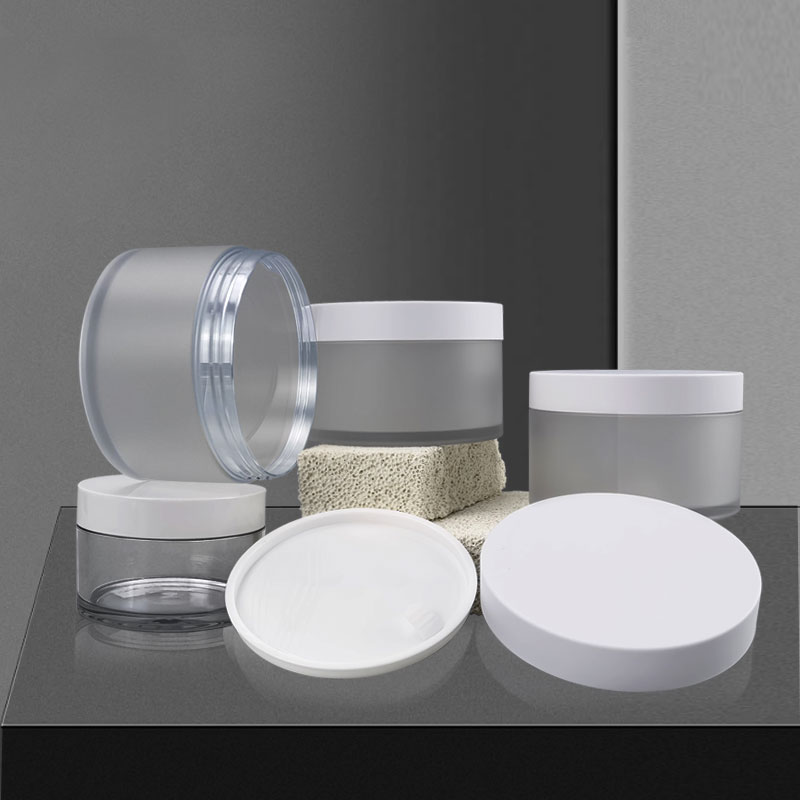
For a long time, the industry was obsessed with the "glass look"—that heavy, expensive aesthetic that screamed luxury. But anyone who has ever dealt with a warehouse knows the pain of breakage. This article dives into why the heavy-wall plastic jar has become the secret weapon for savvy brands looking to balance prestige with practicality, and why the real magic lies in the customization depth that a capable supplier must offer.
The Weight of Quality: Why Thic Wall Plastic Wins?
It might surprise you to hear a manufacturer say this: a plastic jar now rivals glass for shelf appeal. The key lies in the "wall." A thick wall PET or PETG jar creates a tactile experience that is almost indistinguishable from glass when picked up. This increased wall thickness not only mimics the weight of crystal but also provides the durability that glass cannot guarantee in today's e-commerce shipping environment .
When we discuss s and lids, the focus is often on the visual. But the physical interaction—the "heft" of the jar when a customer unscrews the lid—is a psychological signal of value. A thin-walled container feels cheap, regardless of how good the label looks. —while the package can remain lighter, easier to customize and more practical for large-scale production.This is one reason heavy-wall plastic has become an interesting option for creams, balms, masks, scrubs and other beauty products that traditionally rely on glass or thick-walled containers.
Why Thick Wall Design Matters in Cosmetic Jar Packaging?
Thick wall construction is not only about appearance. It also changes how the package feels in the hand.
Imagine two 100ml cream containers with the same overall dimensions. One has a thin wall and lightweight construction; the other uses a more substantial wall and a carefully proportioned base. Even before opening either product, the second package is likely to feel more solid. That tactile difference can reinforce a premium positioning, particularly for face creams, night creams, masks and other products sold at higher price points.
For brands, this creates an interesting opportunity. A well-engineered cosmetic jar packaging solution can reproduce some of the visual and tactile qualities associated with glass while retaining the manufacturing flexibility of plastic. The package can be produced in opaque white, translucent finishes, frosted effects or custom colors, depending on the desired brand identity.
There is also a practical advantage. Plastic is generally more forgiving during transportation and handling than glass. A jar that will travel through multiple distribution stages, enter retail stores and eventually be used in a bathroom does not have to be treated as delicately as a glass container. That does not mean plastic is indestructible, of course, but the material gives brands more flexibility when balancing appearance with everyday usability.
PET, PLA or ABS: Which Material Works for a Glass-Like Cosmetic Jar?
If the goal is to replace glass without losing its most recognizable feature—transparency—material selection becomes particularly important. Not every plastic can deliver the same level of clarity, depth or surface appearance. For a premium cream jar, the material needs to do more than hold the formula; it needs to create the visual impression that makes the packaging look substantial and refined.
PET is often the first material to consider when transparency is a priority. It can provide high clarity and a clean surface that allows the color and texture of the product to remain visible. This makes it suitable for brands looking for a glass-like appearance without using actual glass. When combined with a heavy-wall structure, transparent PET can create visual depth through the thicker sidewall, giving the jar a more substantial appearance than a thin plastic container. Generally speaking, the production cost of PLA is higher. To put it bluntly, even in Shenzhen, only large plastic packaging factories can produce custom-made products made of PLA.It is also used in luxury plastic packaging, making it a practical choice for brands balancing premium appearance with production considerations.
PLA offers a different proposition. As a bio-based plastic, PLA can be attractive to brands that want to incorporate a renewable material story into their packaging. Depending on the grade and formulation, it can provide a relatively clear appearance, although its optical characteristics and processing requirements are different from PET. For a brand where material positioning and sustainability communication are important parts of the product story, PLA can be worth evaluating. However, the actual formula, storage conditions and production requirements should be considered before selecting it for a cosmetic jar.
ABS is better known for its strength, rigidity and excellent surface-finishing possibilities than for being the first choice for crystal-clear packaging. It can still play an important role in premium jar construction, particularly when the design requires highly precise molded components, a sophisticated surface finish or a more substantial structural feel. For some designs, ABS may be considered for specific components rather than the transparent body itself. The decision should therefore be based on the complete packaging structure instead of assuming that one material has to perform every function.
For brands developing a custom cosmetic jar, the right material ultimately depends on what “glass-like” means for the product. If transparency and product visibility are the priority, PET is often the most straightforward starting point. If a renewable material story is important, PLA deserves consideration. If structural precision and premium surface treatment are central to the design, ABS may have a role in the overall construction. The key is to evaluate transparency, wall thickness, mold design, surface finish, formula compatibility and production cost together before committing to a material.
Cosmetic Jars and Lids Need to Be Designed as One Package
A premium jar can lose its visual impact if the lid feels cheap.
This is why cosmetic jars and lids should be considered as a complete packaging system. The lid diameter, height, edge profile, threading, inner structure and surface finish all influence the final appearance. Even a small mismatch between the jar body and cap can make the package feel less refined.
Heavy-wall jars often benefit from proportionally substantial lids. A very thin lid on a thick jar creates a visual imbalance, while an oversized lid can make the package look bulky. The goal is to create a consistent relationship between the upper and lower parts of the container.
The closure also has a functional role. The thread and sealing structure need to work reliably with the product and filling process. For creams and other formulations that may be exposed to air repeatedly, the closure should provide a secure fit throughout normal use. This is another reason not to treat decoration as the final answer to a packaging problem. A premium finish cannot compensate for an inconvenient or poorly engineered closure.
How Thick Is a Heavy-Wall PET Cosmetic Jar?
When brands talk about a “heavy-wall” PET jar, they are usually referring to a noticeably thicker plastic wall than that of a conventional lightweight container. In custom cosmetic packaging, a 3–5 mm wall thickness can be a practical reference range for a substantial PET jar, although there is no universal standard that applies to every design. The final thickness depends on the jar's diameter, capacity, shape, molding structure and the level of weight and rigidity the brand wants to achieve.
Thickness also has a direct effect on the visual experience. A thin transparent PET wall can look relatively light and may not provide the depth associated with glass. As the wall becomes thicker, light travels through more material, creating stronger visual depth and broader reflections along the curved surface. This is one reason a 3–5 mm PET cosmetic jar can produce a noticeably more substantial appearance than a conventional thin-wall package, especially when the surface is highly polished or lightly frosted.
However, simply making every part of the jar 5 mm thick is not necessarily the best solution. Excessive thickness can add unnecessary material, increase weight and raise production costs without delivering a proportional improvement in appearance. In a custom project, the wall thickness should therefore be optimized according to the jar's structure rather than treated as a single number. A good cosmetic jar manufacturer will consider the sidewall, base, shoulder and rim together to achieve the desired glass-like weight and clarity while keeping the package practical
How Frosted and Opaque Finishes Create a Premium Appearance?
Once the physical structure is right, surface treatment can dramatically change the character of a jar.
Clear plastic can emphasize transparency and purity. Frosted finishes soften reflections and create a more refined, almost glass-like appearance. Matte surfaces can produce a modern, understated look, while spray coatings add another tactile layer when the brand wants the package to feel particularly luxurious.
Color can be equally important. Pure white is popular for clean beauty and dermatological-style products, while cream, beige, pastel and custom Pantone colors can create a more distinctive identity. Gradient effects are also possible when the manufacturing and decoration process is designed appropriately.
For skin care jars, the finish should support the formula and positioning rather than simply follow a trend. A translucent jar may make sense when the cream itself has an attractive color or texture. An opaque jar may be more appropriate when the brand wants a minimalist appearance or does not want the formula visible.
The interesting part is that several of these effects can be achieved on plastic without trying to imitate glass literally. The better strategy is often to borrow the visual qualities consumers associate with premium glass—depth, clarity, weight, smoothness and precision—while allowing plastic to retain its own design advantages.
What Should Brands Ask Cosmetic Jars Suppliers Before Ordering?
When comparing cosmetic jars suppliers, price is obviously important, but it should not be the only comparison point.
Ask how the supplier handles mold development, wall-thickness control, sampling, color consistency and decoration. For heavy-wall packaging, production consistency is particularly important because the appearance depends heavily on geometry. If the wall thickness or surface quality varies noticeably from one production batch to another, the premium effect can be weakened.
Sampling should also involve the actual filling process whenever possible. A jar may look excellent when empty but behave differently after filling. The shoulder, opening, internal depth and closure should be checked with the intended cream or gel to make sure the package is practical for production and end use.
For brands planning wholesale cosmetic jars, it is worth resolving these details before placing a large order. Spending additional time on a sample is generally much easier than discovering a structural or decoration problem after mass production has started.
From Glass-Like Appearance to a More Flexible Packaging Solution
Heavy-wall plastic does not have to compete with glass by copying every characteristic of glass. Its real advantage is that it gives brands another way to achieve a substantial, refined appearance while maintaining the design and manufacturing flexibility of plastic.
The best results usually come from several small decisions made together: appropriate wall thickness, a balanced lid, clean geometry, the right material, controlled surface finish and accurate decoration. None of these elements needs to be excessive. In fact, over-designing the jar can make it look less premium.
For a packaging supplier such as Zhenghao, the development process can start with a simple sketch, reference image or existing sample and progress through structural design, mold making, sampling, mass production and decoration. Zhenghao has been providing custom plastic packaging since 2007, with capabilities covering plastic jars, bottles and containers for cosmetics, personal care, food, medicine and other applications.
A well-made Cosmetic Jar ultimately succeeds when the consumer notices the quality without having to think about why it feels premium. The package sits on the shelf, looks substantial, feels solid when picked up, opens smoothly and fits naturally into the product experience.
That is the real value of heavy-wall plastic: not pretending to be glass, but using plastic intelligently enough to deliver the elegance, presence and customization that a modern cosmetic brand actually needs.
Table of Contents
- The Weight of Quality: Why Thic Wall Plastic Wins?
- Why Thick Wall Design Matters in Cosmetic Jar Packaging?
- PET, PLA or ABS: Which Material Works for a Glass-Like Cosmetic Jar?
- Cosmetic Jars and Lids Need to Be Designed as One Package
- How Thick Is a Heavy-Wall PET Cosmetic Jar?
- How Frosted and Opaque Finishes Create a Premium Appearance?
- What Should Brands Ask Cosmetic Jars Suppliers Before Ordering?
- From Glass-Like Appearance to a More Flexible Packaging Solution